The effect of Sadness on Visual Artistic Creativity in Non-Artists
{{brizy_dc_image_alt entityId=

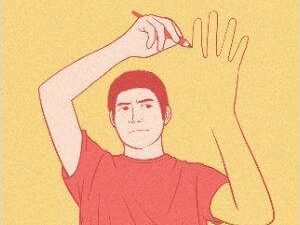
It is now online the final published version of the Article “The effect of Sadness on Visual Artistic Creativity in Non-Artists” by Massimiliano Palmero, Laura Piccardi, Marco Giancola, Raffaella Nori and Paola Guariglia published in Brain Sciences.

In the present study we investigated the effects of mood states on artistic creativity. Mood states were induced by instructing participants to listen to self-selected happy, sad, or neutral music for ten minutes. Then, all participants were asked to make two artistic drawings. To check for mood manipulation, the Profile of Mood States (POMS) was administered before and after listening to the self-selected music. After the mood induction, the negative group reported higher scores than the other two groups in the ‘depression’ subscale and lower scores than the other two groups in the ‘vigour’ subscale of the POMS; the positive mood group showed more vigour than the negative mood group. Yet, three independent judges assigned higher ratings of creativity and emotionality to the drawings produced by participants in the negative mood group than drawings produced by participants in the other two groups. These results confirmed that specific negative mood states (e.g., sadness) positively affect artistic creativity, probably because participants are more likely to engage in mood-repairing. Limitations and future research directions are presented.
More from the Blog

{{brizy_dc_image_alt entityId=
The I-KAPCAM-AI-Q: A Novel Instrument for Evaluating Healthcare Providers’ AI Awareness in Italy
The I-KAPCAM-AI-Q: A Novel Instrument for Evaluating Healthcare Providers’ AI Awareness in Italy Bridging the Gap in AI Integration for Italian Healthcare Understanding AI Readiness Among Italian Medical Professionals The integration of Artificial Intelligence (AI) into healthcare holds immense promise for improving diagnostics, treatment, and patient care. However, successfully leveraging AI requires a thorough understanding […]
{{brizy_dc_image_alt entityId=
Editorial: Effects of physical exercise on brain and cognitive functioning, volume II
It is now online the editorial: Editorial: Effects of Physical Exercise on Brain and Cognitive Functioning, volume II by Soledad Ballesteros, Laura Piccardi, and Joshua Oon Goh, published in Frontiers in Human Neuroscience. The editorial introduces Volume II of this research topic, which focuses on the effects of physical activity on the brain and cognition. […]
{{brizy_dc_image_alt entityId=
May reducing driving-related phobia recover developmental topographical disorientation? A case report
It is now online the article: May reducing driving-related phobia recover developmental topographical disorientation? A case report. by Cecilia Guariglia, Samuele Russo, Alessia Bonavita, Raffaella Nori and Laura Piccardi, published in Applied Neuropsychology: Adult. In this article, we report the case of a girl with developmental topographical disorientation (DTD) and driving related fear (DRF) who struggled to learn driving routes due to her phobia. Her […]
Scroll to Top