
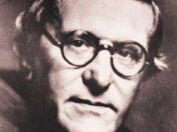
Agostino Gemelli: Pioneer of Spatial Orientation in Flight
Now online in the Journal of the History of the Neurosciences, the article "Gemelli’s legacy in the knowledge of spatial orientation in flight" by Paola Verde and Laura Piccardi sheds new light on the pioneering work of Agostino Gemelli. An Italian Franciscan friar, physician, and psychologist, Gemelli laid the groundwork for modern aviation psychology in the early twentieth century. His research into the spatial orientation of pilots anticipated scientific discoveries by decades, revealing a visionary understanding of human cognitive mechanisms.
Who Was Agostino Gemelli? A Profile Between Faith and Science
Agostino Gemelli was more than a man of faith; he was also a brilliant scientist. During World War I, he served as a medical officer and pilot, an experience that confronted him with a critical challenge: how to select the best aviators for the job. His revolutionary answer would mark a turning point in the history of flight.
The Birth of Aviation Psychology: Pilot Selection in World War I
In the early days of military aviation, pilot selection was based almost exclusively on physical criteria. Gemelli intuited that the most crucial abilities were not in the muscles, but in the mind. He began developing methods to assess the cognitive and psychological attitudes of candidates, focusing on their ability to manage stress, make quick decisions, and, most importantly, orient themselves in a three-dimensional and unnatural environment like the sky.
Beyond the Physical: The Importance of Cognitive "Attitudes"
Gemelli’s work was the first to argue that an excellent pilot must possess specific mental skills. He anticipated modern concepts such as field dependence/independence—an individual's ability to distinguish an object from its surrounding context. This skill is fundamental for a pilot who needs to interpret an instrument panel while immersed in the vast and disorienting airspace.
Gemelli and Spatial Cognition: An Analysis That Foreshadowed Modern Neuroscience
Gemelli's most extraordinary contribution lies in the field of spatial cognition. Decades before it became a systematic area of scientific inquiry, he analyzed how the human mind constructs a representation of space. Read today, his analysis proves to be incredibly modern and prophetic.
Gestalt Psychology and the Mental Representation of Space
Applying the principles of Gestalt psychology, Gemelli understood that human perception is not a passive recording of visual stimuli. Instead, the brain actively constructs mental representations (or "cognitive maps") of space. This insight is now a cornerstone of cognitive neuroscience and explains why two pilots, under the same external conditions, can have entirely different perceptions and reactions.
Ground vs. Aerial Orientation: A Critical Distinction
Gemelli was one of the first to clearly distinguish between spatial orientation on the ground and in flight. On land, we rely on stable reference points. In the air, the body is subjected to forces (acceleration, tilts) that deceive the senses, and reference points are dynamic or absent. Gemelli recognized the complex interaction between a pilot's internal cognitive characteristics and external environmental factors—a concept now central to research in cognitive ergonomics and human-machine interaction.
The Forgotten Legacy and Its Modern Rediscovery
Despite their innovative nature, Agostino Gemelli's findings were largely ignored after World War II, leaving a gap in scientific historiography. This article by Verde and Piccardi not only fills that gap but also repositions Gemelli as a key figure in the history of the neurosciences. His work stands as one of the earliest and most lucid explorations of the cognitive mechanisms behind spatial orientation and aviation psychology, proving that great scientific ideas can sometimes emerge far ahead of their time.
The photograph was sourced from WIKIPEDIA