It is now online the Article -Congenital lack and extraordinary ability in object and spatial imagery: An investigation on sub-types of aphantasia and hyperphantasia- by Liana Palermo, Maddalena Boccia, Laura Piccardi and Raffaella Nori, published in Consciousness and Cognition. The article suggests a distinction between two subtypes of aphantasia/hyperphantasia. Spatial aphantasia is associated with difficulties in visuo-spatial mental imagery and sense of direction. Instead, in object aphantasia there are difficulties in imaging single items and events — with no mental visualization of objects, out-of-focus, and black-and-white mental images more frequent than expected — in sense of direction and face recognition. Furthermore, associative involuntary imagery can be spared in aphantasia. The opposite pattern of performance was found in spatial and object hyperphantasia.
Congenital lack and extraordinary ability in object and spatial imagery: An investigation on sub-types of aphantasia and hyperphantasia

More from the Blog

Effects of Physical Exercise on Brain and Cognitive Functioning
It is now online the Effects of Physical Exercise on Brain and Cognitive Functioning by Soledad Ballesteros, Laura Piccardi and Joshua Oon Soo Goh, published in Frontiers in Human Neuroscience, section Cognitive Neuroscience. It is an open access public...

The I-KAPCAM-AI-Q: A Novel Instrument for Evaluating Healthcare Providers’ AI Awareness in Italy
The I-KAPCAM-AI-Q: A Novel Instrument for Evaluating Healthcare Providers’ AI Awareness in Italy Bridging the Gap in AI Integration for Italian Healthcare Understanding AI Readiness Among Italian Medical Professionals The integration of Artificial Intelligence (AI) into healthcare holds immense promise for improving diagnostics, treatment, and patient care. However, successfully leveraging AI requires a thorough understanding […]
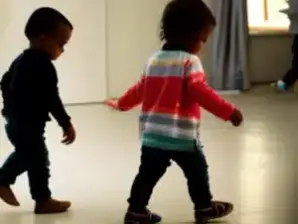
Adaptations of the Walking Corsi Test (WalCT) for 2- and 3-year- old preterm and term-born toddlers: A preliminary study.
It is now online the Article “Adaptations of the Walking Corsi Test (WalCT) for 2- and 3-year- old preterm and term-born toddlers: A preliminary study. ” by Nuria Martín-Pozuelo, Verónica Robles-García, Laura Piccardi, Alejandro Quintela del Rio, Javier Cudeiro, Isabel De las Cuevas-Terán, published in Frontiers in Pediatrics. In the present study are preliminary reported data […]